The Bedding Edit
How to Choose a Wool Comforter for Year-Round Sleep
The right comforter is less about chasing maximum warmth than finding a layer that suits your room, your sleep habits, and the way the seasons change. Wool offers a distinctive balance of insulation and breathability—but weight, construction, and care all matter.
A comfortable bed is built in layers, and the comforter is often the one that determines whether a night feels restful or restless. Too much insulation can leave a warm sleeper kicking off the covers; too little can make a cool room feel unforgiving by morning. Wool comforters appeal to people looking for warmth with a less heavy, less stuffy feel, but not every wool-filled design behaves the same way. Choosing well starts with understanding your own sleeping temperature and the conditions in your bedroom.
Wool is valued in bedding for its natural insulating and moisture-managing qualities. It can help create a more comfortable microclimate beneath the covers, but it is not a promise that every sleeper will feel cool or that one comforter will suit every season. Fill weight, quilting, cover fabric, room temperature, sleepwear, and the rest of your bedding all influence the result. Treat the label as a starting point, then consider how the comforter will fit into your everyday routine.
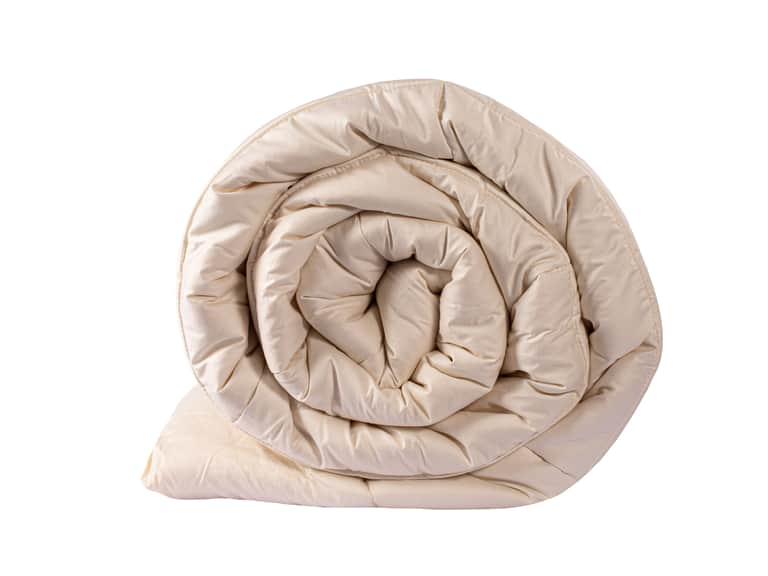
For a lighter option designed with changing seasons in mind, the Sleep and Beyond myMerino Wool Comforter Light offers a useful example. It is filled with organic superfine merino wool, covered in 400-thread-count organic cotton sateen, and described as a lightweight, three-season comforter. Its stated wool fill weight is six ounces per square yard. Those details make it possible to assess the design in practical terms rather than relying on the word “light” alone.
Begin with your sleeping temperature
Before comparing fibers or finishes, pay attention to what happens during an ordinary night. Do you regularly push the covers away, wake feeling too warm, or prefer a cool room and a substantial top layer? Do you sleep comfortably under a medium-weight duvet, or do you reach for an additional blanket in winter? These habits offer more useful guidance than a general assumption about what a wool comforter should feel like.
Warm sleepers and people in temperate or warm climates may prefer a lightweight comforter, especially if the bedroom stays warm overnight. A lighter wool-filled design can offer a layer of insulation without the substantial loft of a heavier winter comforter. In a colder room, or for someone who often feels chilled, more fill or an additional blanket may be necessary. The aim is not to select the warmest option available; it is to find a level of insulation that supports comfort without becoming cumbersome.
- If you sleep warm: Look first at lightweight designs and breathable shell fabrics. Consider whether the room itself retains heat at night.
- If your room changes temperature: A lighter comforter can provide flexibility when paired with a removable layer that you can add or take away.
- If you sleep cold: Compare fill weight and construction, and consider a warmer design or a separate blanket rather than expecting a light comforter to work alone.
- If two people share a bed: Account for differing comfort preferences. Layering separate blankets on top can be more adaptable than choosing one very heavy comforter for both.
Bedroom temperature is only one part of the picture. A mattress protector, flannel sheets, pajamas, a duvet cover, and even the number of people in the bed affect warmth. When comparing wool bedding, think about the whole sleep setup and avoid making a decision from a single product description or a season label.
Understand fill weight and warmth
One of the most useful specifications to find is the amount of fill in the comforter. Fill weight refers to the mass of insulating material used, often described relative to the comforter’s area. It is not the same as the total weight of the finished product, which also includes the fabric cover and stitching. When manufacturers provide a fill-weight figure, it gives you a more concrete point of comparison than a broad phrase such as “all-season.”
The myMerino Wool Comforter Light lists a fill weight of six ounces per square yard. This provides context for its lighter-weight positioning, but it does not make it universally suitable for every climate or sleeper. A comforter’s warmth depends on more than fill quantity: the fiber, quilting pattern, fabric shell, and air trapped within the finished construction all play a role. Comparisons are most meaningful when specifications are presented in similar units and relate to products of a similar size and construction.
Be cautious about treating “year-round” as a guarantee. In a well-heated home, a light comforter may work through much of the year. In a drafty room or a region with very cold winters, the same design may feel best during warmer months and transitional seasons. A flexible bed often comes from using a lighter base layer with an extra blanket nearby, rather than asking one piece to cover every temperature swing.
Why breathability and moisture management matter
Warmth is only one dimension of sleep comfort. A bed can feel unpleasant when heat and moisture accumulate, even if the comforter is technically insulating enough. Wool fibers are valued for their ability to absorb moisture vapor, while the fiber and fabric structure can support airflow. In a well-designed comforter, these qualities may help the bedding feel more balanced than a dense layer that traps heat. Individual results vary, however, and the room’s humidity, bedding layers, and personal temperature all matter.
Wool is not a cooling technology in the sense of actively lowering body temperature. It does not replace a comfortable room, appropriate sleepwear, or lighter bedding when the weather is hot. Rather, its appeal lies in insulation paired with moisture handling: it can help provide warmth while avoiding some of the clammy feeling people associate with poorly matched bedding. For sleepers who tend to overheat beneath heavy covers, a lighter wool comforter may be worth considering, particularly if the fill and shell are clearly specified.
The myMerino Light is described as breathable and designed to absorb moisture before it feels damp. Its cotton sateen cover adds another part of the experience: a smooth shell that encloses the wool fill. If you are sensitive to fabric feel, look beyond the filling and check the cover material and weave as carefully as you check the fiber content. A comforter can have a natural fill and still feel different from another wool option because its shell, quilting, and finish differ.
Look closely at construction
Even, dependable warmth depends on how the fill is held in place. Quilting creates sections that help distribute the insulation across the comforter and limit shifting. The layout and scale of the stitched compartments can affect how the bedding drapes and how consistently it covers the bed. Inspect the description for details about quilting or other construction features, and check whether the maker explains how the fill is secured.
The myMerino Light uses a quilted construction described as preventing the wool batting from shifting. That matters in everyday use: a comforter that keeps its filling evenly distributed is more likely to provide consistent coverage across its surface. Stitching also contributes to the look. A more structured quilted design can appear neat and tailored under a duvet cover, while a softer, less formal finish may have a more relaxed drape.
Size deserves equal attention. A comforter should cover the mattress adequately, with enough overhang for how you make the bed and how you sleep. Check the manufacturer’s measurements rather than relying on the size name alone; dimensions can vary among brands. For the myMerino Light, the listed measurements include 68 by 86 inches for twin, 90 by 90 inches for full/queen, and 102 by 90 inches for king. Confirm the dimensions against your mattress and duvet cover before ordering.
A closer look at the myMerino Wool Comforter Light
The Sleep and Beyond myMerino Wool Comforter Light is positioned as a lighter alternative to a more insulating wool comforter, with three-season use in mind. Its filling is certified organic superfine merino wool, and its shell is 400-thread-count organic cotton sateen. The product information also identifies GOTS and OEKO-TEX 100 certifications. These specifications help describe the materials and declared standards; shoppers who want to understand the precise scope of a certification can consult the certifier’s own documentation.
Its stated wool fill weight—six ounces per square yard—makes it a particularly relevant example for anyone comparing lightweight comforters. The product details describe it as suitable for warmer seasons and for sleepers looking for a more breathable layer. Those are useful signals, but “light” should still be read in relation to your bedroom and personal comfort. A person who sleeps cold in an unheated room may want a heavier option or a supplementary blanket, while someone in a mild climate may find a lighter layer more versatile.
The comforter is offered in several sizes, from crib through larger bed dimensions, and the product information describes a hand-filled wool construction. It also notes that the comforter is manufactured in an eco-friendly factory in the Kyrgyz Republic. If origin, manufacturing practices, or certifications are important to your decision, use the product specifications as a prompt to seek further information about the standards and processes that matter to you.
As with any bedding purchase, evaluate the comforter against your actual needs rather than treating a brand description as a universal recommendation. Its lighter fill and listed construction may be a good match for a warm sleeper, a temperate bedroom, or a bed that is already layered with other textiles. If your room becomes cold in winter, plan for seasonal adjustment instead of assuming the same comforter will feel equally warm in every month.
Care is part of the buying decision
A comforter that suits your temperature but proves difficult to maintain may not be the right fit for your household. Wool bedding generally benefits from thoughtful care, and cleaning instructions vary by product. Read the label before purchase, especially if you prefer bedding that can be washed frequently at home. Do not assume that a natural fiber can be machine-washed simply because a different wool item can.
For the myMerino Light, the care guidance recommends using a removable duvet cover to protect the comforter and reduce the need for cleaning. The cotton cover may be spot-cleaned with a soft brush and mild detergent, then allowed to dry fully. For major stains, the provided guidance recommends eco-friendly dry cleaning on a short cycle with limited moisture. It also suggests airing and sunning the comforter. Follow the current care label and manufacturer instructions, as they should take precedence over general advice.
A duvet cover can make maintenance more straightforward because it forms a washable barrier between the comforter and everyday use. Choose a cover that fits the comforter properly and fasten it securely so the insert does not bunch inside. Regular airing in a dry, well-ventilated space can refresh bedding between washes, but it is not a substitute for cleaning when the comforter is soiled. Keep the product dry before storing it, and follow the maker’s recommendations for long-term storage.
Consider materials, standards, and sourcing
People who shop for wool bedding may also want to understand where the fiber comes from, how it is processed, and what a stated certification covers. Look for clear material disclosures and certifications that are relevant to the questions you have. A certification can provide useful information about specified criteria, but labels are not interchangeable and should not be treated as proof of every possible environmental or animal-welfare claim.
For the myMerino Light, the product information identifies certified organic wool and an organic cotton shell, alongside GOTS and OEKO-TEX 100 references. These designations relate to standards that shoppers can investigate through their respective organizations. If a particular issue is central to your choice—such as chemical testing, fiber origin, or production practices—check the exact certification, its scope, and whether the relevant product or facility is covered.
Durability is another part of responsible purchasing. A comforter that is cared for according to its instructions and protected with a cover may remain in use longer than one frequently exposed to stains or unnecessary cleaning. Consider whether the product suits your climate and routine well enough to become a regular part of your bed. The most thoughtful purchase is not automatically the most luxurious or the thickest; it is the one you can use comfortably and maintain appropriately.
A practical checklist before you choose
When comparing wool comforters, bring the decision back to a few tangible questions. Product descriptions can be full of evocative language, but the most useful details are often straightforward: the amount of fill, shell material, construction, size, and care instructions. Use this checklist to narrow the field.
- How warm is your room at night? Consider seasonal temperature changes, heating, insulation, and ventilation.
- How do you sleep? Note whether you tend to feel warm, cool, or comfortable under your current bedding.
- What is the fill weight? Compare figures only when the units and product details are clear.
- What is the cover made from? The shell contributes to touch, breathability, and the overall feel of the comforter.
- How is the filling held in place? Look for information about quilting or other construction that supports even distribution.
- Will the dimensions fit your bed and cover? Verify measurements instead of relying on a size label alone.
- Can you follow the care requirements? Check whether spot cleaning, professional cleaning, and protective covers fit your routine.
- Are certifications and sourcing clearly described? Confirm the scope of claims that matter to you.
The verdict: choose for your real nights
The best wool comforter is the one that makes sense for the room you sleep in, the temperature you prefer, and the care you are willing to give it. A lighter design can be an elegant, adaptable choice for warm sleepers and milder conditions, while a colder room may call for more insulation or a considered layering strategy. Breathability and moisture management are important, but they should be weighed alongside fill weight, shell fabric, construction, size, and care.
The Sleep and Beyond myMerino Wool Comforter Light brings those considerations into focus: organic superfine merino wool fill, an organic cotton sateen cover, quilted construction, and a stated six-ounce-per-square-yard fill weight. It is an example of a lightweight wool-bedding approach, not a one-size-fits-all answer. Compare its specifications with your own sleep habits and bedroom climate, and make room for seasonal layers if your conditions change.
Ultimately, year-round comfort is less a matter of finding a single perfect object than of building a bed that can adapt. Begin with the layer that suits most of your nights, protect it with an appropriate cover, and keep an extra blanket at hand for colder spells. The result is a sleep setup that feels considered rather than overworked: warm when needed, breathable when the room softens, and easy to adjust as the seasons turn.